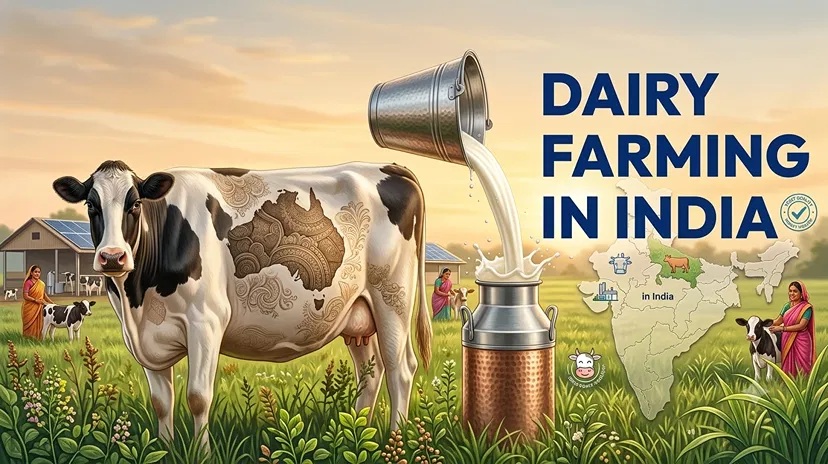



Average yields climb from under five to eight litres per cow as the sector integrates IVF breeding, disease eradication, and circular dung monetization.
India’s dairy sector is executing a major strategic transition, evolving from sheer herd expansion toward a science-driven model focused on milk yields per animal, indigenous genetics, and diversified income streams. As detailed in an analytical report by The Pamphlet, national bovine productivity has increased significantly over the past decade: average daily milk output per animal has climbed to approximately eight litres, up from under five litres in fiscal year 2013–14. This shift highlights a deliberate policy focus on maximizing output from existing livestock rather than increasing animal headcounts across rural milk sheds.
Data from official livestock censuses underscores why this intensive approach has become central to rural development. Between the 19th and 20th Livestock Censuses, India’s total bovine population edged up by just 1.3 percent over seven years—from 300 million to 303.76 million head (comprising 192.52 million cattle and 109.9 million buffaloes). While states like West Bengal, Madhya Pradesh, and Bihar expanded their numerical livestock base, dairy powerhouses such as Gujarat maintained largely static or slightly consolidated herd numbers (26.9 million total livestock in 2019) while systematically increasing aggregate milk output. By focusing on breed selection, veterinary networks, and organized cooperative collection through unions like Banas Dairy, the sector has demonstrated that genetic conversion efficiency delivers higher economic returns than maintaining large, low-yielding herds.
At the core of this genetic transformation is the deployment of advanced reproductive technologies supported by the central government’s Rashtriya Gokul Mission. A primary benchmark in this strategy is the recently commissioned Bharat Bovine Breeding and Research Centre (BBBRC) at Bhildi in Gujarat’s Banaskantha district. Spanning 127 acres, the facility represents the country’s first dedicated breeding and research station for indigenous Kankrej cattle, while supporting other native breeds including Gir, Sahiwal, and Tharparkar, alongside high-yielding dairy buffalo lines such as Mehsana, Murrah, Banni, and Jaffarabadi. Utilizing in vitro fertilization (IVF), ovum pick-up (OPU), and multi-ovulation embryo transfer (MOET), the centre is designed to produce 25,000 high-pedigree embryos annually, giving smallholder producers direct access to elite germplasm without requiring substantial capital outlays for live replacement stock.
Complementing genetic enhancement is a sustained focus on preventative herd healthcare and circular farm economics. To curb the productivity losses caused by endemic livestock illnesses, India’s nationwide Foot-and-Mouth Disease (FMD) vaccination campaign has administered nearly 1.5 billion vaccine doses, covering animals owned by more than 80 million livestock farmers. Beyond milk sales, cooperatives are developing secondary revenue streams derived from animal by-products. Commercial bio-CNG facilities—such as the plants established by Banas Dairy in Tharad and Radhanpur, which together process 175 metric tonnes of cattle dung daily—demonstrate how converting agricultural waste into compressed biomethane and certified organic fertilizers creates circular income for village milk suppliers while addressing soil degradation.
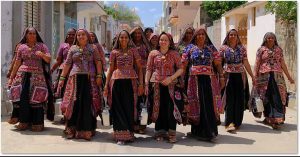
At the macroeconomic policy level, dairy operates as a critical stabilizer within the broader agricultural economy, supported by cash transfers via PM-KISAN, crop insurance programs, and historical support schemes that have distributed over 196,000 milch cows to tribal women in western India since 2007. However, sustaining these gains will require addressing persistent bottlenecks in quality fodder availability, rural chilling networks, and farmgate pricing transparency. Heading into 2027, the ongoing integration of reproductive biotechnology, widespread immunization, and bio-energy monetization establishes a viable roadmap for transforming smallholder dairying into a resilient, high-margin rural enterprise across India.
Source: The Pamphlet
You can now read the most important #news on #eDairyNews #Whatsapp channels!!!
🇮🇳 eDairy News ÍNDIA: https://whatsapp.com/channel/0029VaPidCcGpLHImBQk6x1F