

Circular packaging partnership incorporates contaminated, hard-to-recycle dairy containers into polymer-modified road infrastructure.
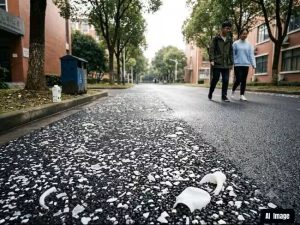
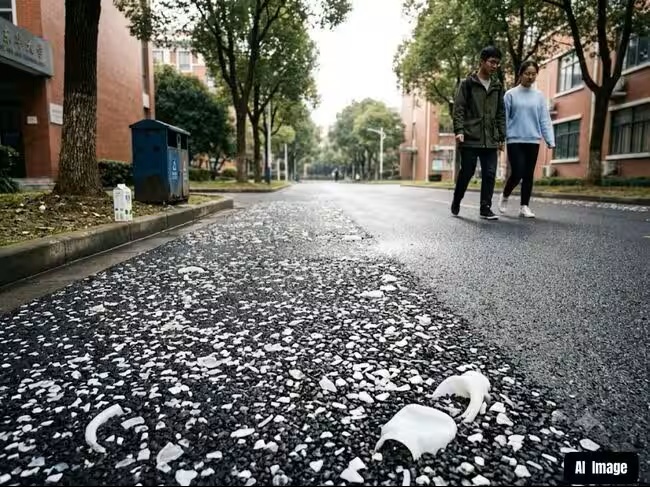
Commercial dairy packaging faces an enduring sustainability hurdle: while rigid plastic milk containers are technically recyclable, residual organic fats and liquids frequently lead conventional recyclers to reject them due to contamination. In Shanghai, an innovative circular infrastructure initiative provided an unconventional second life for this problematic waste stream. By integrating more than 6,000 discarded milk bottles alongside other post-consumer plastics into polymer-modified asphalt, project developers constructed a dedicated roadway at the East China University of Science and Technology (ECUST) Xuhui Campus, turning low-value dairy waste into high-durability paving material.
The technical project was engineered in partnership between materials science multinational Dow and Chinese premium dairy brand Shiny Meadow. Rather than routing discarded bottles into municipal landfills or energy-intensive disposal streams, the collaboration collected post-consumer packaging and converted it into specialized raw materials for road construction. Using specialized polymer modification technology, the recovered plastics were melted and blended into standard bitumen mixtures, proving that dairy containers deemed low-value by commercial re-processors can be successfully re-channeled into heavy infrastructure.
The persistent roadblock for post-consumer dairy packaging stems directly from milk residue adhering to interior container walls. In municipal recycling operations, washing and sanitizing tainted plastic containers requires additional water, chemical inputs, and sorting overhead, often rendering collection economically unviable. For premium fluid milk brands utilizing rigid plastic formats to preserve product quality, establishing viable off-take channels for returned containers remains critical to avoiding extended producer responsibility liabilities and meeting corporate circular economy targets.
Beyond diverting post-consumer plastic from local waste streams, incorporating plastic polymers into asphalt formulation delivers direct engineering and environmental benefits. Polymer-modified asphalt enhances pavement elasticity, tensile strength, and resistance to rutting under heavy vehicular load cycles, effectively extending the functional lifespan of the roadway and reducing municipal maintenance frequency. Furthermore, substituting a fraction of conventional petroleum-based bitumen with recycled post-consumer polymers lowers the embodied carbon footprint and energy consumption of standard asphalt batching plants.
The Shanghai milk bottle road highlights a viable operational pathway for dairy brand owners seeking to decarbonize their product lifecycle and improve packaging stewardship. As consumer scrutiny over single-use plastics intensifies and municipal waste regulations tighten worldwide, dairy processors cannot rely solely on standard closed-loop container-to-container recycling. Developing scalable cross-industry partnerships that repurpose hard-to-recycle packaging into durable civic infrastructure establishes a tangible circular model, protecting enterprise reputation while helping cities absorb high-volume commercial waste streams.
Source: The Economic Times
You can now read the most important #news on #eDairyNews #Whatsapp channels!!!
🇮🇳 eDairy News ÍNDIA: https://whatsapp.com/channel/0029VaPidCcGpLHImBQk6x1F