


FMCG major integrates sustainability across capital investments as upstream dairy accounts for over 70% of its corporate environmental footprint.
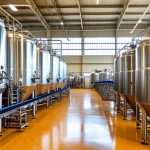
Nestlé India is preparing to inaugurate its tenth domestic manufacturing facility near Khurda in Odisha, positioning the new plant as a benchmark for integrating resource efficiency and sustainable engineering into industrial expansion. Speaking on the company’s manufacturing strategy, Kunwar Himmat Singh, Director of Corporate Affairs and ESG for Nestlé South Asia Region, noted that the company treats sustainability not as an isolated cost center or separate vertical, but as an embedded criterion governing all capital expenditure proposals, equipment acquisitions, and recipe reformulations.
The FMCG conglomerate operates against a broader corporate climate roadmap aimed at reaching net-zero carbon emissions, using 2018 operational data as its baseline measurement. Having established interim benchmarks to reduce greenhouse gas emissions by 20 percent by 2025 and 50 percent by 2030, Nestlé reported that it has already surpassed its 2025 milestone and remains on course toward its 2030 objective. Company leadership emphasized that progress is evaluated through verified environmental outcomes—including lower plastic consumption, optimized water resource management, and automated energy tracking—rather than standalone budgetary figures.
While operational improvements span packaging, logistics, and factory engineering, primary agriculture remains the single largest driver of the company’s environmental footprint. According to Singh, upstream dairy sourcing accounts for more than 70 percent of Nestlé India’s total sustainability footprint, establishing the dairy supply chain as the central priority for emission reduction initiatives. Consequently, the company’s agricultural decarbonization programs focus heavily on on-farm interventions, methane management, and regenerative livestock practices across its milk procurement networks.
To address these supply-side challenges, the company utilizes an integrated framework that targets multiple nodes of the value chain simultaneously. Alongside dedicated dairy initiatives, Nestlé is scaling sustainable sourcing frameworks across coffee and spice procurement through programs like the Nescafé Plan. By combining responsible farmgate procurement with circular manufacturing systems, the organization aims to decouple long-term volume growth from environmental degradation across its regional operating basins.
The construction of the Khurda plant reflects how multinational food and dairy manufacturers are aligning regional capacity expansion with rigorous Scope 3 emission targets. As consumer goods companies face increasing investor and regulatory scrutiny regarding agricultural emissions, embedding decarbonization metrics into primary procurement and processing infrastructure has become essential. For the Indian dairy sector, corporate initiatives by major buyers like Nestlé will continue to accelerate the adoption of climate-resilient farming practices and verified sustainable milk sourcing.
Source: The Economic Times / ET Manufacturing
You can now read the most important #news on #eDairyNews #Whatsapp channels!!!
eDairy News ÍNDIA: https://whatsapp.com/channel/0029VaPidCcGpLHImBQk6x1F