


Over 1.2 crore women in Uttar Pradesh are transforming the rural dairy economy, leveraging self-help groups and producer enterprises to build financial self-reliance.
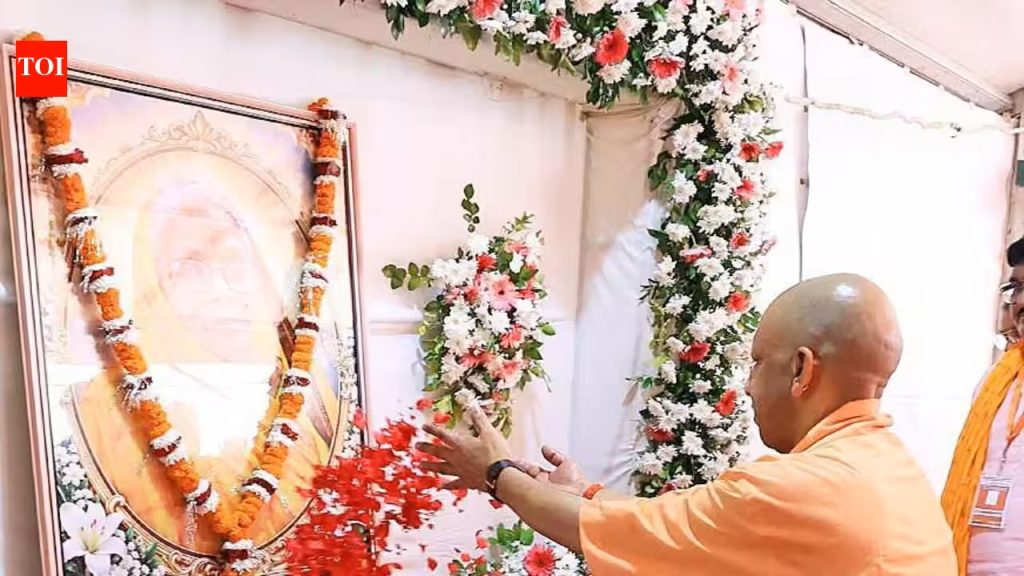
State leadership in Uttar Pradesh has underscored the pivotal role of women as the primary engines of rural economic transformation, highlighting their leadership across commercial dairy farming, self-help groups, and decentralized banking networks. Addressing regional gatherings in Basti and Lucknow, Chief Minister Yogi Adityanath affirmed that state-backed empowerment initiatives have mobilized more than 1.2 crore women into organized community institutions and commercial producer collectives. Central to this socio-economic transition is the integration of grassroots dairy husbandry with financial inclusion programs like the Lakhpati Didi initiative, which targets sustainable household earnings exceeding ₹100,000 annually. By anchoring rural livelihoods in daily milk commercialization and formal credit delivery, the state is shifting rural households away from subsistence agriculture toward structured micro-enterprises. The systematic integration of women into commercial agribusiness demonstrates how targeted institutional support can formalize informal agrarian labor and accelerate rural economic development.
From an operational and milk collection perspective, women-led dairy producer companies and cooperative societies are modernizing the procurement landscape across Uttar Pradesh’s milk production basins. Grassroots institutions—such as the Balinee Milk Producer Company in Bundelkhand alongside expanding village-level collection centers—have placed operational governance directly into the hands of female dairy farmers. These localized organizations deploy automated milk collection units, electronic milk testers, and digital weighing scales to ensure transparent, real-time determination of butterfat and solids-not-fat percentages. By automating procurement testing and logging daily deliveries into centralized cloud systems, female milk producers have eliminated the arbitrary discounting historically imposed by traditional village middlemen and unorganized private traders. Direct procurement models guarantee that value-added realizations from bovine milk harvesting flow directly into individual farmer accounts, providing predictable working capital to sustain herd health and feed rations.
The commercial formalization of rural milk flows works in close synergy with financial technology and the Banking Correspondent Sakhi (BC Sakhi) initiative. Deploying thousands of trained rural women equipped with biometric micro-ATMs and point-of-sale terminals has brought formal banking infrastructure directly to remote village doorsteps. Rather than traveling long distances to urban commercial bank branches to access dairy proceeds or state subsidies, farming households now conduct digital banking transactions within their local habitations. This digital liquidity cycle allows women dairy producers to immediately reinvest milk revenues into high-protein cattle feed, mineral supplements, and veterinary interventions. Furthermore, linking daily milk income with verified bank accounts creates formal credit histories, enabling self-help groups to secure institutional bank loans at concessionary interest rates to finance herd expansion and crossbred dairy cattle acquisitions.
From an enterprise finance and cooperative balance sheet perspective, channeling state support into women-centric dairy collectives strengthens rural asset creation and mitigates agricultural default risk. Dairy farming provides a reliable, non-cyclical cash flow that shields rural families from crop failures caused by erratic monsoon cycles or unseasonal weather shocks. State government measures—including enhanced honorariums for frontline Anganwadi workers, subsidized artificial insemination services, and capital grants for cattle shed construction—lower the entry barriers for marginalized households entering the commercial dairy value chain. As women-led milk producer organizations expand operational throughput, they achieve economies of scale in bulk purchasing of bypass protein feeds and silage bales, lowering the unit cost of milk production across member herds. Reinvesting operating surpluses into localized bulk milk chilling centers preserves raw milk quality and strengthens the balance sheets of community-owned producer enterprises.
At the farmgate level, empowering women as independent commercial dairy operators elevates household nutrition, child education, and generational equity in rural communities. Daily control over milk checks grants women greater decision-making authority over family investments, with earnings consistently directed toward improved domestic living standards and higher-quality animal nutrition. As breeding programs and sexed semen technologies expand across northern India heading into 2027, female smallholders managing two to five dairy animals will remain the cornerstone of national fluid milk supply growth. Aligning grassroots self-help group networks with modern dairy processing infrastructure ensures that rural women transition from unrecognized agricultural laborers into commercially resilient agribusiness managers, underpinning the long-term economic stability of India’s dairy heartland.
Source: The Times of India
You can now read the most important #news on #eDairyNews #Whatsapp channels!!!
🇮🇳 eDairy News ÍNDIA: https://whatsapp.com/channel/0029VaPidCcGpLHImBQk6x1F