



India’s largest dairy cooperative has reduced net volumes across its ₹5, ₹10, and ₹20 buttermilk pouches without altering retail sticker prices, following recent hikes in milk, curd, and butter.
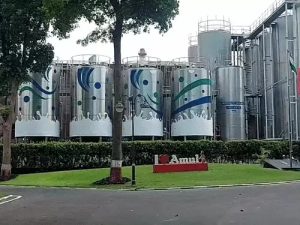
Amul, marketed by the Gujarat Cooperative Milk Marketing Federation (GCMMF), has implemented volume reductions across its popular retail buttermilk pouches while keeping maximum retail prices unchanged. Under the revised packaging specifications rolled out across Gujarat and key domestic markets, consumers paying the same nominal price now receive between 10 milliliters and 30 milliliters less product per pouch. This quiet downsizing—widely characterized in retail economics as shrinkflation—allows the cooperative to pass on raw milk procurement and processing inflation without breaching psychological retail price thresholds. Rather than raising unit sticker prices on high-turnover daily staples, the dairy giant has adjusted fill volumes across its entire entry-level fermented beverage portfolio.
Detailed packaging adjustments span all three core price tiers of regular and spiced buttermilk pouches sold through neighborhood parlors and general trade outlets. In the highest-volume ₹20 pack, net content has been trimmed by 30 milliliters, dropping from 650 milliliters to 620 milliliters—an effective unit price increase of 4.8 percent per milliliter. Similarly, the mid-tier ₹10 pouch has been reduced by 20 milliliters, moving from 300 milliliters down to 280 milliliters, which represents a 7.1 percent jump in effective per-milliliter cost. Even the entry-level ₹5 jeera spiced buttermilk pouch saw a 10-milliliter cut from 150 milliliters to 140 milliliters, ensuring that unit margin recovery applies across every consumer price point.
Across India’s highly price-sensitive fast-moving consumer goods sector, retaining fixed coin-denominated price points such as ₹5, ₹10, and ₹20 is critical for preserving daily impulse velocity and rural distribution. Liquid buttermilk, or chaas, serves as an essential everyday dietary staple for millions of middle-class and lower-income households, making outright price hikes commercially risky for volume retention. By shaving between 4.6 percent and 6.7 percent off net pouch weights, the cooperative protects retail demand elasticity while quietly offsetting higher packaging, cold-chain logistics, and fermented dairy processing expenses. This commercial strategy mirrors broader margin-defense tactics increasingly adopted across India’s packaged food and beverage industry during periods of input inflation.
The buttermilk volume adjustment comes immediately on the heels of sequential upward price revisions across Amul’s broader fresh and fat-based dairy categories in November 2026. Just days earlier, the cooperative raised retail prices on fresh liquid milk variants alongside Masti curd and probiotic lassi pouches, following earlier November increases of ₹3 per 100 grams on pasteurized butter and ₹50 per kilogram on ghee. Cooperative leadership has maintained that higher consumer realizations are necessary to fund increased farmgate milk procurement payouts for millions of member dairy farmers facing elevated cattle feed and fodder costs. Together, direct price increases on high-fat products and volume reductions on entry-level pouches demonstrate a multi-tiered revenue management approach.
Looking ahead, retail analysts expect Indian dairy cooperatives and private processors to rely heavily on pack-size engineering and selective SKU repricing to balance farmer payout commitments against urban consumer inflation fatigue. While post-festive demand remains resilient across western and northern India, consecutive adjustments across milk, curd, butter, ghee, and buttermilk place noticeable pressure on household food budgets. How rival regional dairy federations respond in key consumption states will determine whether volume downsizing becomes the industry standard for fermented dairy beverages heading into 2027.
Source: Bhaskar English
You can now read the most important #news on #eDairyNews #Whatsapp channels!!!
🇮🇳 eDairy News ÍNDIA: https://whatsapp.com/channel/0029VaPidCcGpLHImBQk6x1F