
India will never compromise on sensitive agri-food chapters, reiterating strict exclusions for dairy products derived from animal-fed cattle, calf rennet, and genetically modified commodities ahead of US trade discussions.
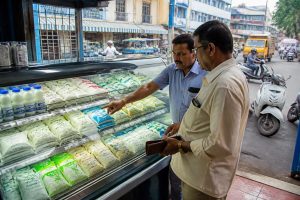
India’s Union Minister of Commerce and Industry, Piyush Goyal, has reaffirmed the government’s stance regarding agricultural protections in ongoing and future Free Trade Agreements (FTAs). Speaking at the Young Leaders Discourse Forum at Kirori Mal College, Delhi University, Goyal stated that India has not opened—and will never open—sensitive domestic segments such as dairy, marine products, and Genetically Modified (GM) crops to foreign tariff concessions, specifically addressing concerns surrounding bilateral trade engagements with major dairy-exporting nations like the United States.
Central to New Delhi’s firm exclusion of foreign dairy is a combination of socio-economic protection for rural livelihoods and deep-seated cultural and religious values. Goyal emphasized that commercial dairying in several western nations, including the United States, permits the feeding of ruminants with animal-derived supplements, blood meal, or bone meal, alongside the traditional use of calf-derived animal rennet in cheese processing. Such production systems are fundamentally incompatible with the dietary and religious principles of India’s predominantly vegetarian population. India’s food safety regulations (FSSAI) strictly mandate that imported milk and dairy commodities carry certification confirming they originate entirely from cows and buffaloes raised on vegetarian diets and never fed mammalian tissues.
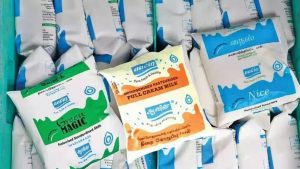
Beyond religious considerations, the minister’s statement reinforces the socio-economic imperative of insulating India’s domestic milk market—the largest in the world by volume. Unlike large-scale, capital-intensive dairy models in North America and Oceania, India’s dairy framework is rooted in a cooperative, smallholder-driven model involving over 80 million rural households, many of whom maintain herds of only two to four animals. Exposing domestic milk producers to competition from subsidized, high-volume foreign dairy powders and fats would undermine farmgate prices and disrupt rural livelihoods across the country.
Goyal categorized trade strategy into “offensive sectors”—where India actively negotiates aggressive market access for exports such as processed foods, horticultural goods, textiles, pharmaceuticals, and engineering products—and “sensitive sectors,” which remain protected. Highlighting that India’s agricultural exports currently stand at approximately ₹5 lakh crore ($60+ billion), he underscored the potential for value-added dairy and processed agri-food branding to capture premium returns globally without yielding access to domestic raw commodity markets.
The policy position aligns with India’s macro trade trajectory. With national merchandise and services exports from April to September 2026 reaching nearly $480 billion, the Ministry of Commerce is targeting more than $520 billion in the second half of FY 2026 to achieve a historic $1 trillion total annual export milestone. Goyal noted that export volumes for October 2026 showed positive momentum. Heading into 2027, India’s message to international negotiating partners remains definitive: while bilateral trade expansion across industrial, technology, and service domains is actively pursued, the domestic dairy sector remains outside the scope of tariff negotiations.
India Trade Policy & Bilateral Red Lines
India’s FTA Framework: Sensitive Exclusions vs. Offensive Sectors
Ministerial parameters governing market access, cultural standards, and agricultural defense.
Non-Negotiable Exclusions (Protected Sectors)
Dairy & Milk Products
Zero Concessions
Zero Concessions
Prohibition on imports derived from cattle fed animal tissues or processed with calf rennet; protects 80M+ smallholders.
Genetically Modified (GM) Foods & Marine Products
Fully Excluded
Fully Excluded
Shields artisanal fishing communities and preserves domestic non-GM agricultural integrity.
Offensive Export Targets (Seeking Preferential Global Access)
Processed Food
Branded value-add
Agri & Horticulture
₹5 Lakh Cr base
Textiles & Pharma
Core manufacturing
FY 2026 Export Roadmap ($1 Trillion Total Target)
$480B Achieved (H1)
$480B Achieved (H1)
Apr–Sep 2026: ~$480B
H2 FY26 Target: >$520B
H2 FY26 Target: >$520B
Source: CNBC-TV18 / Ministry of Commerce & Industry
eDairyNews International Trade Intelligence
eDairyNews International Trade Intelligence
Source: CNBC-TV18
You can now read the most important #news on #eDairyNews #Whatsapp channels!!!
🇮🇳 eDairy News ÍNDIA: https://whatsapp.com/channel/0029VaPidCcGpLHImBQk6x1F