



Banas Dairy commissions the Bharat Bovine Breeding and Research Centre in Bhildi, deploying advanced IVF and embryo transfer to upgrade indigenous cattle genetics.
Banas Dairy (Banaskantha District Co-operative Milk Producers’ Union) has established a landmark bovine genetics hub in Gujarat’s Banaskantha district, commissioning the ₹325-crore Bharat Bovine Breeding and Research Centre (BBBRC) at Bhildi. Developed over a 127-acre campus with technical guidance from the National Dairy Development Board (NDDB) and supported under the central government’s Rashtriya Gokul Mission, the high-tech facility is engineered to produce 25,000 elite bovine embryos annually. Scheduled for formal inauguration by Prime Minister Narendra Modi, the project represents a major cooperative commitment to accelerating genetic gains, raising herd productivity, and preserving India’s prized indigenous cattle and buffalo germplasm.
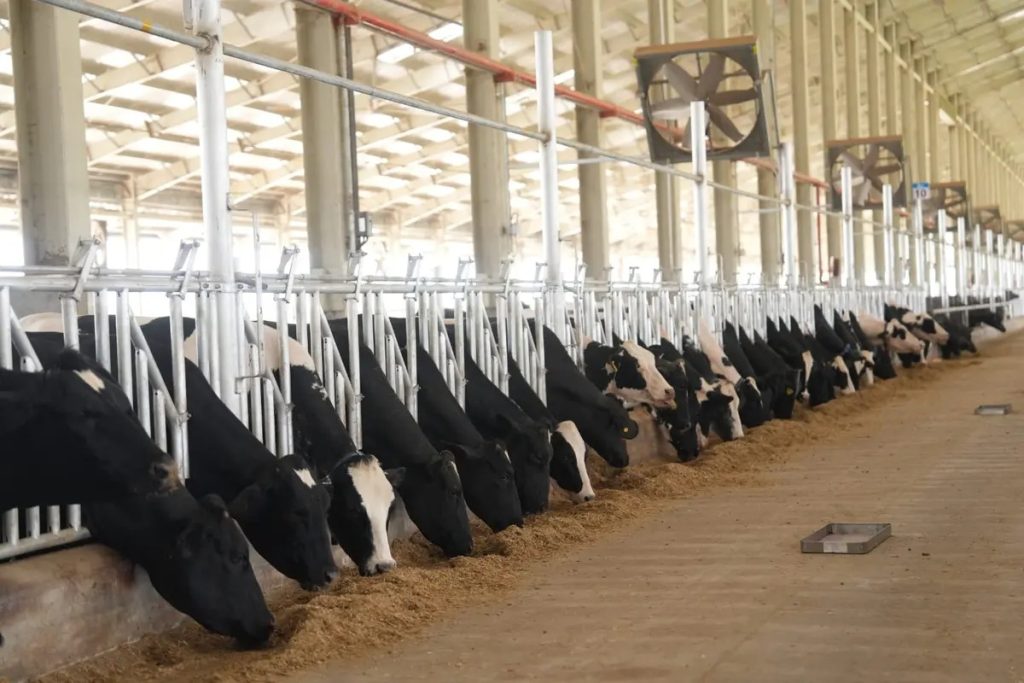
The research complex integrates cutting-edge reproductive biotechnology, deploying in vitro fertilization (IVF), ovum pick-up (OPU), and multi-ovulation embryo transfer (MOET) to rapidly multiply animals carrying superior genetic traits. By selecting top-tier donor cows and buffaloes with proven high-milk-yield lineage, the centre bypasses the slow generational timelines inherent to traditional natural service or conventional artificial insemination. Alongside embryo production, the campus will house disease-free elite breeding bulls to supply sex-sorted semen and high-pedigree embryos directly to smallholder dairy farmers at affordable rates, ensuring that superior genetics penetrate grassroots rural milk cooperatives.
From an agronomic and bovine genetics standpoint, the breeding program prioritizes climate resilience and indigenous biological advantages. The facility focuses on elite indigenous cattle breeds—specifically Gir, Kankrej, and Sahiwal—alongside premier dairy buffalo breeds like Murrah and Mehsana. Rather than selecting exclusively for peak fluid milk volume, the breeding index emphasizes thermal tolerance, tick and tropical disease resistance, high feed conversion efficiency, and elevated milk composition (fat and solids-not-fat/SNF). In arid and semi-arid agro-climatic zones, these indigenous characteristics allow cows to sustain consistent yields under rising summer temperatures and variable forage conditions.
From an on-farm economic and cooperative supply chain perspective, accelerating genetic potential provides a pathway to lower production costs per liter of milk. For smallholder and landless farmers across Gujarat and neighboring states, maintaining low-yielding, non-descript cattle exerts severe financial pressure due to rising cattle feed and dry fodder costs. Upgrading village herd genetics through viable embryo transfer allows milk producers to achieve higher aggregate output with fewer, more productive animals, substantially improving net household returns. Furthermore, because rural women manage the majority of day-to-day dairy animal care across Banaskantha, higher animal productivity directly translates into enhanced female economic empowerment and rural disposable income.
At the national dairy policy level, the inauguration of the Bhildi genetics center supports the central government’s “Sahkar Se Samruddhi” (Prosperity through Cooperation) initiative and broadens the national mission for indigenous breed conservation. By pairing cooperative infrastructure with advanced veterinary science, Banas Dairy is shifting the paradigm from basic milk collection to foundational genetic research and biological asset building. Heading into 2027, the deployment of 25,000 advanced embryos annually sets a modern benchmark for how India’s cooperative dairy unions can harness biotechnology to secure long-term dairy self-sufficiency and farmer prosperity.
Source: The Hawk
You can now read the most important #news on #eDairyNews #Whatsapp channels!!!
🇮🇳 eDairy News ÍNDIA: https://whatsapp.com/channel/0029VaPidCcGpLHImBQk6x1F