


Agricultural economist Ashok Gulati argues that India must pivot from staple cereal surpluses toward high-value dairy, livestock, and agriphotovoltaics to sustainably raise rural incomes.
In an analytical column published in The Indian Express, distinguished agricultural economist Dr. Ashok Gulati examined the trajectory of Indian agriculture over Prime Minister Narendra Modi’s 25 years in public service—encompassing 13 years as Chief Minister of Gujarat and 12 years as India’s Prime Minister. While national agricultural Gross Value Added (GVA) has maintained a steady real growth rate of approximately 4.0 percent since 2014—underpinning national food security in basic staples—Gulati emphasized that aggregate production volume is no longer equivalent to rural prosperity. As India pursues its long-term Viksit Bharat 2047 vision, farm policy must confront structural mismatches in national production baskets and pivot decisively toward augmenting per-capita farmgate incomes through high-value agricultural diversification, particularly dairy, livestock, and decentralized solar energy generation.
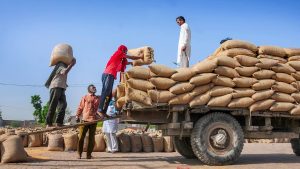
From an agricultural economics and commodity balancing perspective, India’s current agricultural regime is characterized by a pronounced demand-supply disconnect. Decades of cereal-centric Minimum Support Prices (MSP) and input subsidies have led to structural overproduction of rice and wheat, with central buffer stocks accumulating at three to four times the required strategic reserves. To manage this surplus, the government has diverted nearly 7 million tonnes of rice into fuel ethanol production—a policy Gulati describes as economically and environmentally misaligned given its negative net energy balance. In contrast, India runs an agricultural trade deficit of approximately $7 billion driven by massive import dependence on edible oils and pulses. Achieving genuine self-reliance (Atmanirbharta) and optimizing farm revenues requires rebalancing policy incentives away from water-intensive cereals toward high-value, market-aligned commodities that match modern dietary shifts.
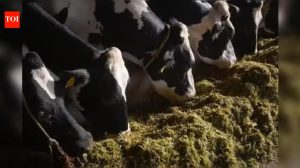
The column highlights that the unfulfilled objective of doubling real farm incomes—originally benchmarked by the Ashok Dalwai Committee as requiring 10.4 percent annual agricultural GDP growth—demands an immediate shift toward high-value agriculture. Across rural India, the fastest-growing segments of agricultural GDP are no longer field crops, but allied sectors: dairy, poultry, fisheries, and horticulture. Milk and dairy production represent the single largest agricultural commodity by economic value in India, exceeding the combined output value of rice and wheat. Because dairy operations generate daily cash flows, convert crop residues into high-protein food, and withstand climate variability better than seasonal monocultures, integrating smallholder milk production into rural household economies provides the most reliable foundation for lifting net household earnings above baseline subsistence levels.
However, scaling high-value agriculture exposes significant post-harvest and supply chain bottlenecks that require systemic institutional reform. Unlike non-perishable cereals that can be stockpiled in standard central warehouses, milk, fruits, and vegetables are highly perishable commodities that depend on unbroken cold-chain logistics, immediate processing, and efficient market access. Gulati emphasizes that transforming smallholder dairy and horticulture into engines of income growth requires aggregating fragmented producers into Farmer Producer Organisations (FPOs) and primary cooperative societies. Strengthening collective bargaining power, expanding bulk milk chilling infrastructure, and linking village procurement hubs directly to modern urban retail and food-service processors are essential to prevent midstream margin erosion and secure transparent component pricing for rural producers.
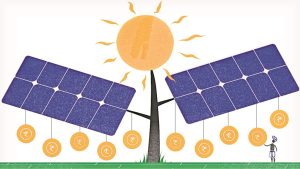
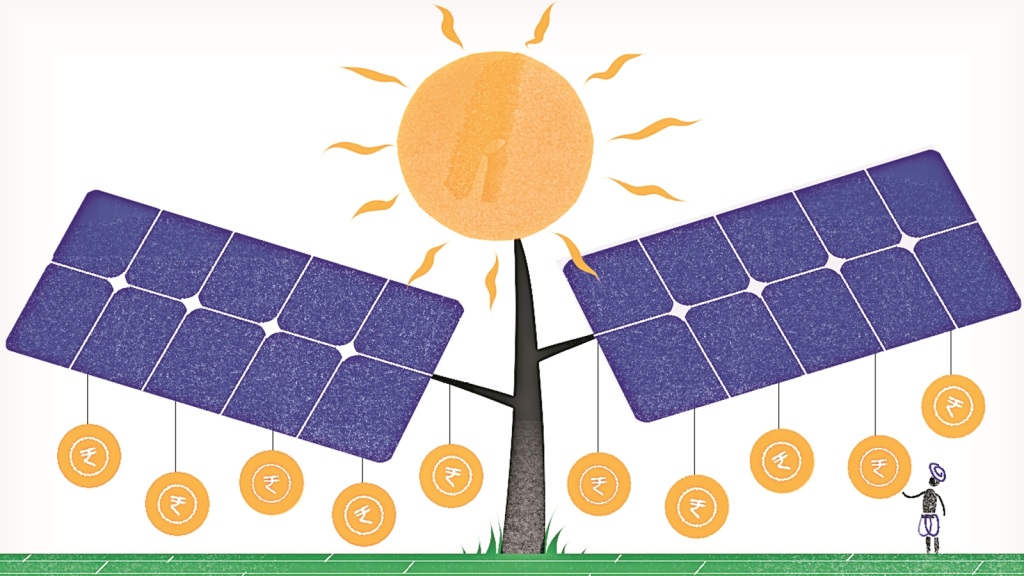
Beyond livestock diversification, the analysis introduces agriphotovoltaics (Agri-PV) as a transformative technological frontier capable of multiplying farm incomes in the near term. By co-locating elevated solar photovoltaic arrays above active crop fields and dairy shelters, rural producers can harvest solar energy alongside agricultural commodities, transitioning from mere food providers (annadata) into clean energy suppliers (urjadata). Delivering predictable, long-term power purchase revenues directly to farming families creates a non-cyclical income buffer against climate volatility and commodity price swings. Heading into 2027, reorienting public expenditures away from distortive cereal subsidies toward rural cold chains, cooperative processing, and on-farm renewable infrastructure will be vital to securing long-term income resilience across India’s agricultural and dairy sectors.
Source: The Indian Express
You can now read the most important #news on #eDairyNews #Whatsapp channels!!!
🇮🇳 eDairy News ÍNDIA: https://whatsapp.com/channel/0029VaPidCcGpLHImBQk6x1F