
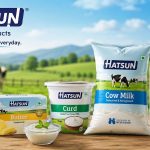


Proposed national statutory framework bans dairy terminology on plant oil alternatives while regional bans escalate across major states.
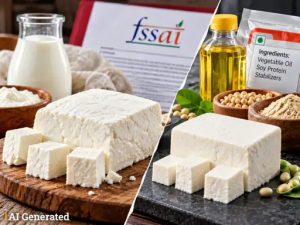
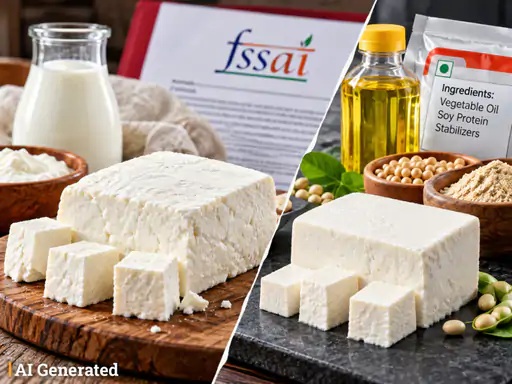
Regulatory frameworks governing dairy nomenclature are undergoing a decisive structural tightening as national food safety authorities introduce draft standards prohibiting the term paneer on non-dairy analogue packaging. The draft regulations mandate that products formulated with starches, vegetable oils, and non-milk solids must eliminate traditional dairy descriptors from front-of-pack branding and ingredient declarations. Establishing an initial sixty-day stakeholder consultation window allows primary cooperatives, private processors, and food manufacturers to submit formal technical feedback before nationwide statutory implementation.
Commercial proliferation of synthetic dairy substitutes has disrupted domestic processing economics by leveraging vast price spreads between imported palm oils and indigenous milk fat. Analogue manufacturers substitute authentic casein and standardized butterfat with hydrogenated fats and industrial binding agents, producing low-cost alternatives that undercut genuine milk processors by significant operating margins. Banning deceptive dairy naming conventions protects consumer transparency while shielding primary dairy processors from unfair wholesale competition across industrial food catering and retail channels.
Sub-national market interventions have intensified concurrently as multiple state administrations enforce outright regional bans on the production, distribution, and commercial service of analogue paneer. Major provincial governments, including Uttar Pradesh, Madhya Pradesh, Gujarat, Maharashtra, and Chhattisgarh, have cracked down on foodservice establishments and highway restaurants serving unlabelled vegetable-fat blocks in place of fresh dairy curd. These coordinated administrative actions address widespread misrepresentation in the commercial foodservice sector, where imitation blocks were routinely substituted for fresh milk curd without consumer disclosure.
Compositional integrity and consumer testing protocols are taking center stage as enforcement wings deploy field-level analytical methods to detect starch and foreign fats. Authentic dairy paneer consists exclusively of heat-acid coagulated milk solids that yield a tender, crumbly curd texture and release natural whey when heated. Conversely, analogue formulations exhibit rubbery elasticity under manual compression due to modified starch stabilizers, while high-temperature immersion separates non-dairy oils and turns dark blue during standardized iodine starch detection assays.
Enforcing strict identity standards provides crucial structural defense for smallholder farmgate procurement networks and organized milk chilling grids. Because legitimate fresh cheese manufacturing requires approximately ten liters of high-component fluid milk to produce a single kilogram of finished curd, market displacement by vegetable analogues directly threatens farmgate raw milk intake volumes. Institutionalizing transparent product categories guarantees that genuine dairy processors retain their earned market share, sustaining procurement payouts and incentivizing continuous capital investments in cold-chain infrastructure.
Source: Bhaskar English
You can now read the most important #news on #eDairyNews #Whatsapp channels!!!
🇮🇳 eDairy News ÍNDIA: https://whatsapp.com/channel/0029VaPidCcGpLHImBQk6x1F