

Tripartite Go-Dhan initiative pairs state subsidies and bank financing to expand commercial milk procurement across eastern India.
Private dairy procurement architecture is expanding into eastern India through a coordinated agricultural development initiative designed to establish more than 6,000 commercial dairy farms over the next three years. The multi-year project integrates private processing capital, provincial government development schemes, and institutional credit from the State Bank of India under the Go-Dhan program. Executed in phased rollouts, the initiative seeks to upgrade rural cattle management, raise household farm incomes, and develop a reliable milk collection shed across agrarian districts in Odisha.
Financial mechanisms under the framework combine targeted public capital subsidies with formal banking credit to dismantle upfront investment barriers for smallholders. Historically, rural milk producers have struggled to secure affordable long-term financing to acquire high-yielding dairy cattle or modernize farm infrastructure. Linking commercial lenders directly with state livestock development schemes provides farmers with structured capital to invest in superior bovine genetics, construct improved animal housing, and install automated on-farm mechanization tools.
Technological modernization forms a core operational pillar of the program, focusing on animal health, scientific nutrition, and precision herd management. Participating producers will receive dedicated extension support covering balanced feed rations, silage production, veterinary health protocols, and clean machine-milking systems. Elevating on-farm hygiene and nutritional efficiency is engineered to lift lactation yields per cow, lowering the marginal cost of production and raising raw milk quality standards to match industrial food-grade specifications.
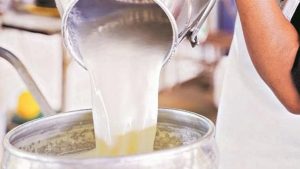
Upstream procurement integration guarantees primary producers an organized, long-term commercial off-take channel for their daily milk yields. Fragmented regional markets often subject smallholder farmers to volatile local buyer pricing and post-harvest spoilage risks during seasonal flush periods. Deploying bulk milk chillers, automated testing centers, and regular payment schedules enables the processing enterprise to absorb expanding raw volumes directly, securing a dedicated, traceable supply of high-component milk solids to feed regional value-added manufacturing operations.
Strategic expansion into eastern India reflects a broader competitive drive among leading private dairy processors to secure uncommitted milk sheds beyond saturated southern markets. While established dairy corridors face intense competition for raw milk and rising farmgate procurement costs, developing fresh supplier networks creates scalable manufacturing security. Establishing 6,000 structured smallholder farms provides an industrial blueprint for public-private partnerships aiming to transform subsistence livestock holding into an economically resilient, commercial dairy enterprise.
Source: The Free Press Journal
You can now read the most important #news on #eDairyNews #Whatsapp channels!!!
🇮🇳 eDairy News ÍNDIA: https://whatsapp.com/channel/0029VaPidCcGpLHImBQk6x1F