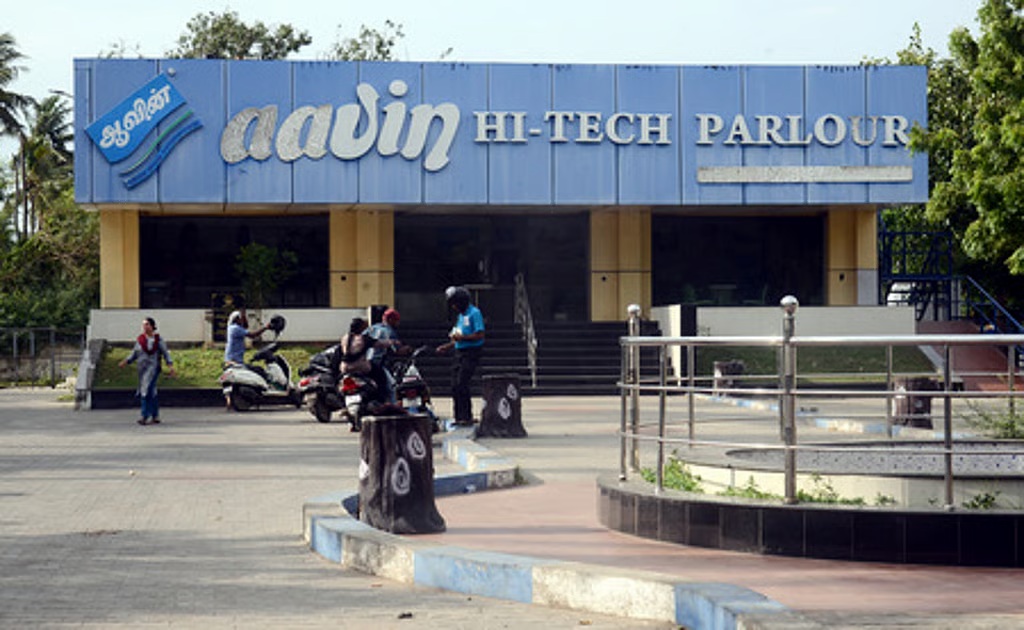




Payout lifts cow milk to ₹44/L and buffalo milk to ₹53/L backdated to September 1, backed by ₹720 crore annual incentive funding while retail rates hold.
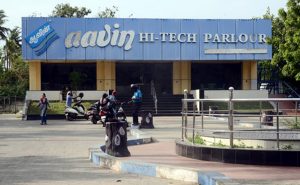
The Government of Tamil Nadu has formally notified a Government Order (GO) executing a substantial upward revision in the milk procurement prices paid to dairy farmers across the state-owned Aavin cooperative network. As reported by The New Indian Express, the order formally puts into effect the policy announced in the Legislative Assembly under Rule 110, backdating the revised procurement prices to September 1, 2026. Under the new operational structure, the farmgate price for cow milk has been lifted from ₹38 to ₹44 per litre, while the procurement benchmark for buffalo milk has been increased from ₹47 to ₹53 per litre.
The financial architecture behind the revised ₹44 per litre cow milk price separates the return into two distinct mechanisms: a base procurement rate of ₹36 per litre and an incentive payment of ₹8 per litre. To cushion the cooperative from acute balance-sheet strain, the state government will provide ₹600 crore annually directly to Aavin to underwrite the incentive component, with constituent district milk producers’ cooperative unions absorbing an additional ₹120 crore per year. Crucially for urban consumers and regional inflation metrics, the state confirmed that the retail selling price of packaged Aavin milk will remain strictly unchanged, avoiding immediate price pass-throughs onto household budgets.
Eligibility for the top procurement rate is linked to stringent compositional quality parameters. To receive the full ₹44 per litre rate, cow milk delivered to primary collection centres must contain a minimum of 4.3% fat and 8.2% Solid-Not-Fat (SNF). To safeguard quality and eliminate adulteration or excessive dilution, the GO stipulates that any milk testing below 3% fat and 7.5% SNF must not be procured, must be confiscated by cooperative officials, and will forfeit all supplier remuneration.
The order also recalibrates operational and administrative deductions across the cooperative tier. Contributions collected from milk suppliers toward the administrative operating expenses of primary milk producers’ cooperative societies have been raised from ₹1.25 to ₹1.75 per litre. Furthermore, district unions will execute a ₹1 per litre deduction from suppliers that will be credited back to farmers through cooperative accounts. To ensure financial transparency and eliminate intermediary leakages, the government has mandated that primary cooperative societies disburse all net procurement payments directly into farmers’ bank accounts via Direct Benefit Transfer (DBT).
This formal government order carries wide regional significance for South India’s competitive milk shed dynamics. By raising baseline cow milk returns to ₹44 per litre via state-backed subsidies, Tamil Nadu has significantly expanded the farmgate pricing gap with neighboring states such as Karnataka. This price advantage not only helps local smallholders cover severe cattle feed and fodder inflation, but also continues to attract cross-border milk flows away from adjacent dairy federations whose procurement rates lag the new Tamil Nadu benchmark.
Source: The New Indian Express
You can now read the most important #news on #eDairyNews #Whatsapp channels!!!
🇮🇳 eDairy News ÍNDIA: https://whatsapp.com/channel/0029VaPidCcGpLHImBQk6x1F