


How India’s small-producer dairy model underpins rural incomes, domestic resilience and economic strategy amid global trade tensions.
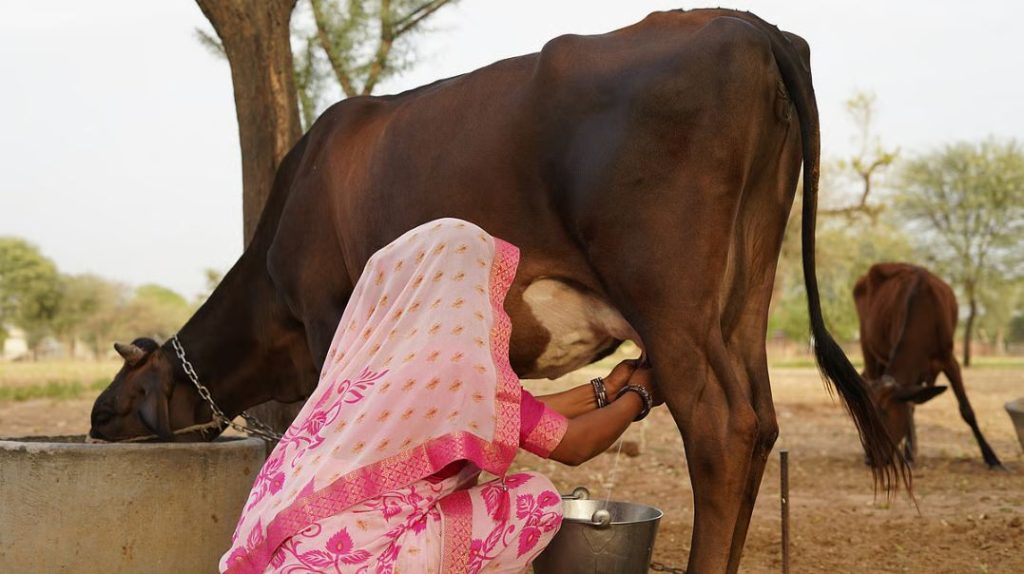
India’s dairy success story stands apart from Western industrial models, rooted in cooperative structures like the Amul system that directly link millions of smallholders to markets with transparency and fair pricing. Small producers — including women in rural villages — bring milk to local collection centres, get paid based on quality measures such as fat content, and feed a supply chain that underpins rural incomes. This bottom-up model contrasts sharply with large-scale mechanised dairying elsewhere.
As the global economic order shifts toward self-reliance and strategic rivalry, India’s domestic consumption-driven dairy system gives the country leverage. Rather than chasing export-led growth, India relies on vibrant internal demand that absorbs rising milk production — now a quarter of global output. The editorial argues that this internal market focus offers economic resilience in trade negotiations with partners like the EU and United States, where agriculture and dairy remain contentious.
India’s cooperative model keeps costs low and sustains rural wellbeing. Household-level dairying minimises labour expenses, while traditional silvo-agro-pastoral practices provide natural fodder and recycle manure into soil fertility. This approach contrasts with high-input industrial dairy systems that depend on antibiotics and dense herds, elevating disease management costs and environmental risks. Scaling India’s sustainable livestock practices could preserve affordability for consumers and strengthen farm-gate returns.
Domestic consumption remains central to the sector’s future. Although India produces more milk than any other nation, most of it is consumed locally. The editorial highlights that vibrant local markets and rising milk demand help circulate income within rural communities, reinforcing economic security. However, traditional dairy competes with growing consumption of ultra-processed foods, underscoring the need to protect and elevate milk’s role in nutrition and household economics.
India’s dairy advantage is both economic and social. By embedding income opportunities in millions of rural households and emphasising sustainable, low-input production, the sector demonstrates a model of growth distinct from Western industrialisation. For global dairy analysts and producers, understanding this cooperative-centric framework is key to engaging with India’s market dynamics, rural livelihoods and policy debates shaping future trade and food systems.
Source: Down To Earth – Advantage India
https://www.downtoearth.org.in/economy/advantage-india
You can now read the most important #news on #eDairyNews #Whatsapp channels!!!
🇮🇳 eDairy News ÍNDIA: https://whatsapp.com/channel/0029VaPidCcGpLHImBQk6x1F