



Milk volumes give way to processing power as margins expand through cheese, yoghurt, powders and speciality ingredients.
India’s dairy industry is undergoing a fundamental shift from volume-driven growth — where profit was tied to litres collected — to margin-focused value creation, as detailed in a feature from Nuffoods Spectrum. Historically centred on liquid milk distribution through vast cooperative networks, the sector is redefining success by capturing more value per litre of milk via deeper processing and premium products.
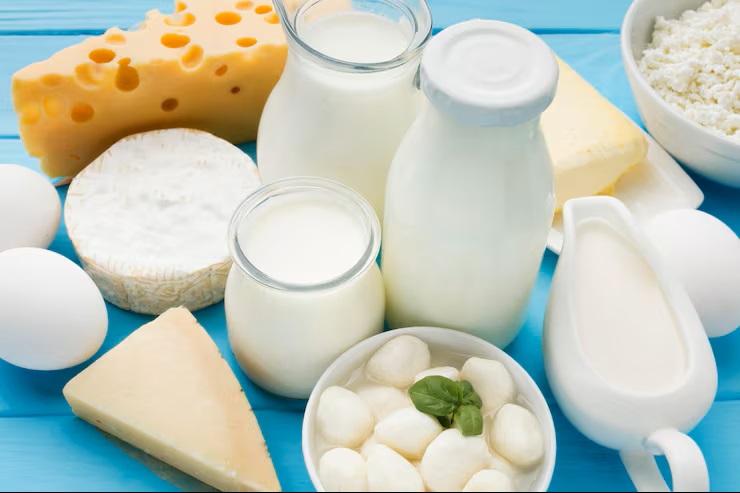
Liquid milk, while still vital for rural livelihoods and national food security, offers tight pricing power and low margins, constrained by politics, price sensitivity and thin consumer loyalty. By contrast, high-margin categories such as cheese, ghee, yoghurt, whey proteins, flavoured beverages, and specialized dairy ingredients are reshaping unit economics. This transition allows processors to extract significantly more revenue from the same input of milk solids.
The shift toward value–added dairy is enabled by strategic investments in processing technologies, cold-chain infrastructure, packaging sophistication, and branding. These enhancements extend shelf life, reduce spoilage, and facilitate broader geographic distribution, easing logistical constraints that once throttled profitability. Dairy firms that diversify into semi-stable and shelf-stable formats can schedule sales more flexibly and improve asset utilization compared with daily fresh milk distribution.
Value addition also opens doors to international markets. Once fractionated into powders, proteins, and ingredients, Indian dairy products can integrate into global supply chains for infant formula, sports nutrition and foodservice, where pricing is driven more by functionality and compliance than by commodity-like price competition. This export optionality helps firms hedge against domestic volatility while commanding pricing resilience.
However, the transformation isn’t without risk. Scaling advanced processing requires capital-intensive infrastructure — from spray dryers to fermentation units — and navigating diverse regional taste profiles complicates market rollouts. Nonetheless, firms that execute effectively are achieving higher and more stable margins, improved returns on capital, and stronger investor appeal, marking a clear evolution in how Indian dairy will compete and grow.
Source: Nuffoods Spectrum — https://nuffoodsspectrum.in/2026/01/05/how-margins-are-changing-indian-dairy.html
You can now read the most important #news on #eDairyNews #Whatsapp channels!!!
🇮🇳 eDairy News ÍNDIA: https://whatsapp.com/channel/0029VaPidCcGpLHImBQk6x1F