


Official UNIDO export rejection data for the period 2010–2024 show that India faced 344 shipment rejections under the HS04 category — which includes dairy — in key markets like the United States and Australia, averaging roughly two blocked consignments per month. Importantly, rejection frequency does not align with export value, suggesting that compliance issues — rather than export scale — drive many blocks.
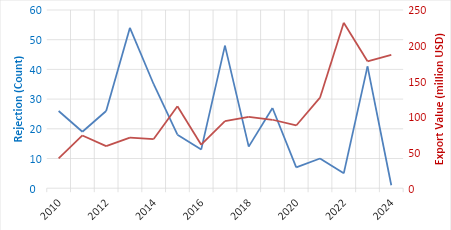
Source: UNIDO.
A detailed breakdown of causes reveals that labelling and documentation errors account for around 57 % of rejections. These include missing allergen declarations, incorrect product descriptions, misleading nutrition claims, improper formatting and non-compliance with destination-specific regulatory requirements. Other causes like bacterial contamination, unauthorised additives and missing paperwork account for smaller shares, while chemical residues are relatively rare.
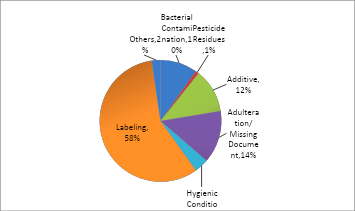
Source: UNIDO.
Indian exporters often rely on uniform “one-size-fits-all” labels for multiple markets, a cost-saving tactic that backfires when regulatory demands differ across destinations. Case studies highlight how even well-known brands have faced rejections: butter oil blocked for lacking allergen identification, products labelled both as “vegetable oil” and “pure ghee,” nutrient claims unsupported by data, and cheese shipments refused for misbranding — underlining that labelling failures are not confined to small enterprises.
The economic costs of these export blocks extend beyond immediate freight and disposal expenses. Rejections raise perceived risk for insurers and lenders, prompt buyers to favour more reliable suppliers, and erode confidence across the dairy value chain — ultimately weakening long-term contracts and farmer incomes. Policy experts argue that improving labelling compliance through market-specific templates, pre-shipment audits and training for exporters — particularly SMEs — offers a low-cost, high-impact intervention to strengthen India’s dairy export competitiveness.
Source: Ideas for India — https://www.ideasforindia.in/topics/trade/labelling-errors-and-export-rejections-a-regulatory-blind-spot-in-indian-dairy-trade
You can now read the most important #news on #eDairyNews #Whatsapp channels!!!
🇮🇳 eDairy News ÍNDIA: https://whatsapp.com/channel/0029VaPidCcGpLHImBQk6x1F