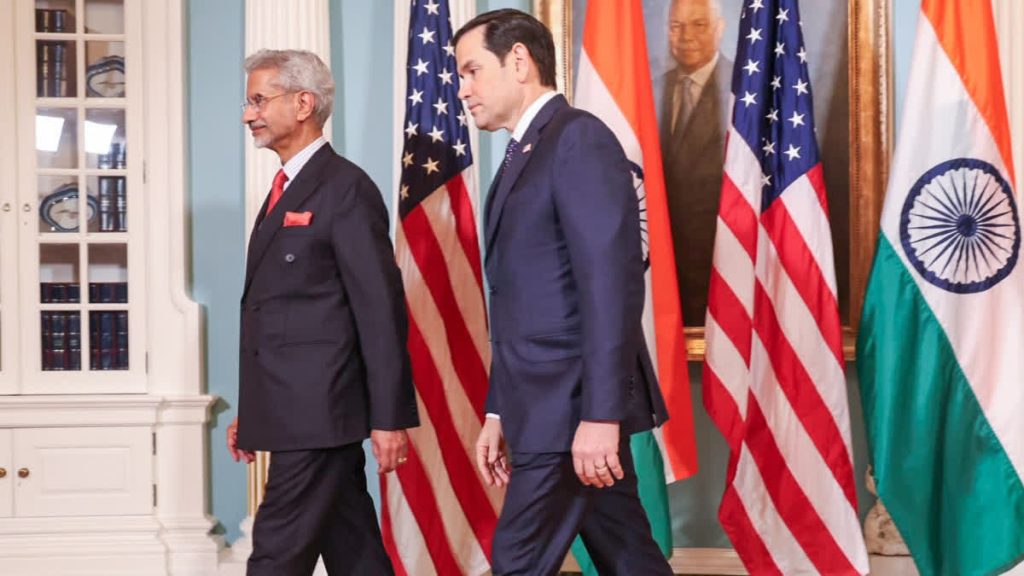


India-US trade returned to the center of diplomatic attention this week after External Affairs Minister Subrahmanyam Jaishankar and US Secretary of State Marco Rubio held a high-level phone conversation to discuss the stalled bilateral trade agreement and wider strategic cooperation.
According to Indian officials, the call took place a day after the newly appointed US ambassador to India publicly confirmed that fresh rounds of trade discussions were being lined up. Jaishankar described the exchange as productive, saying he had a “good conversation” with Rubio and that both sides agreed to remain closely engaged on trade, energy and defence matters.
In a brief social media post, Jaishankar said the two leaders had covered a broad agenda including critical minerals, nuclear cooperation, defence and energy, signalling that India-US trade is now being framed as part of a deeper strategic partnership rather than a standalone commercial deal.
The US Department of State later confirmed the conversation, stating that Rubio and Jaishankar discussed ongoing bilateral trade agreement negotiations and shared their interest in strengthening economic cooperation. The American readout also noted that Rubio congratulated India on the passage of the Sustainable Harnessing and Advancement of Nuclear Energy for Transforming India bill, a move Washington sees as opening the door to greater civil nuclear collaboration.
Tommy Pigott, the Principal Deputy Spokesperson at the State Department, said the two ministers exchanged New Year greetings and reviewed opportunities to enhance cooperation across energy security, critical mineral supply chains and defence. He added that both sides reaffirmed their commitment to a free and open Indo-Pacific.
Behind the diplomatic language, however, lies a relationship that has recently been tested. India-US trade ties deteriorated sharply after President Donald Trump imposed a sweeping 50 percent tariff on Indian goods, including a punitive 25 percent levy linked to India’s purchases of Russian oil. The measures sent shockwaves through export sectors and derailed momentum that had been building around a comprehensive trade pact.
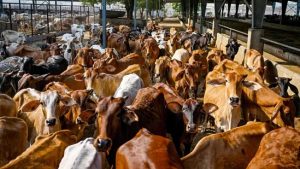
Sources familiar with the negotiations said that despite multiple rounds of talks last year, the two countries failed to clinch a deal, largely because of Washington’s insistence that India further open its agricultural and dairy sectors. These areas remain politically sensitive in New Delhi, where millions of smallholder farmers depend on domestic protection mechanisms.
Speaking earlier this week at the US embassy in New Delhi, Ambassador Sergio Gor underlined how seriously Washington views the relationship. He said that India and the US remain actively engaged on the proposed trade deal and that the next formal conversation on trade was scheduled within 24 hours of his remarks.
“No partner is more essential than India,” Gor said, outlining what he described as an ambitious agenda for the months and years ahead. He emphasized that the two nations would pursue this partnership as strategic equals, each bringing leadership and respect to the table.
The renewed push on India-US trade also came on the same day Trump announced a new 25 percent tariff on any country doing business with Iran. Indian government sources sought to play down the impact, noting that bilateral trade with Tehran is now less than USD 2 billion a year, placing Iran well outside India’s top 50 trading partners. Officials estimate that trade with Iran last year amounted to just USD 1.6 billion, or roughly 0.15 percent of India’s total global trade.
Even so, trade analysts say the broader message from Washington is unmistakable: economic relations are increasingly being linked to geopolitical alignment. For India, that means balancing its long-standing strategic autonomy with the growing importance of access to US technology, capital and markets.
The inclusion of nuclear cooperation and critical minerals in the Jaishankar–Rubio talks is also significant for agribusiness and food supply chains. American officials have been vocal about building resilient supply networks for inputs such as fertilizers, energy and minerals that underpin agricultural productivity. For India, which is striving to modernize its dairy and farm sectors while safeguarding rural livelihoods, these discussions carry long-term implications.
Industry observers say the dairy sector remains one of the thorniest issues in India-US trade talks. Washington continues to press for wider access for American dairy products, while New Delhi is wary of exposing its vast smallholder-based dairy economy to global competition. This tension has repeatedly stalled negotiations, even as cooperation has advanced in other areas such as defence procurement and digital services.
Still, the tone from both capitals suggests that neither side is prepared to let the relationship drift. By placing trade alongside defence, energy and nuclear cooperation in a single conversation, Jaishankar and Rubio signaled that India-US trade is being repositioned as part of a comprehensive strategic framework.
Whether that will be enough to bridge entrenched differences on tariffs, agriculture and dairy access remains to be seen. But after months of friction, the latest exchange indicates that the world’s largest democracy and its most powerful economy are once again testing the waters of compromise.
Written for eDairyNews, with information from: ETV Bharat