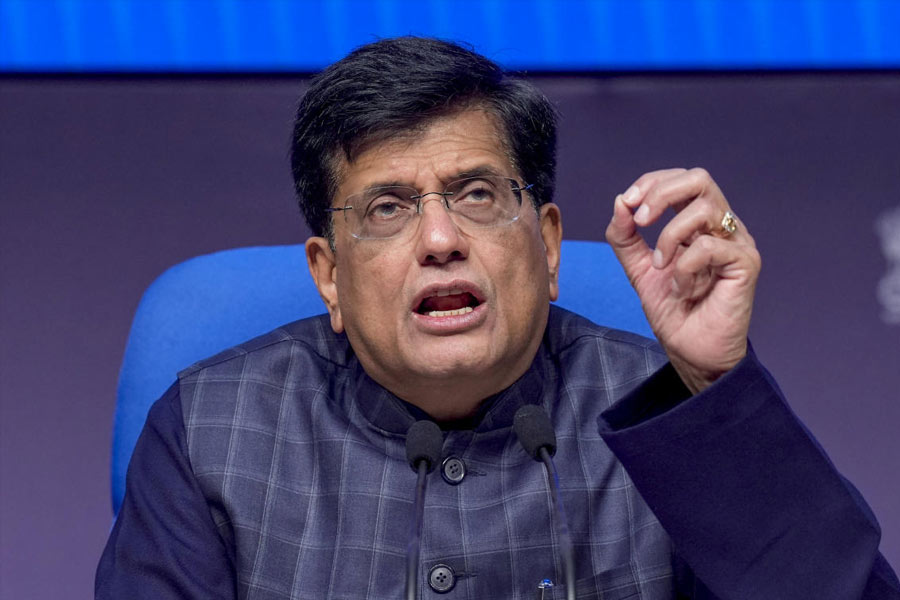




Union Minister Piyush Goyal reaffirms absolute protection for 80 million Indian farmers, excluding dairy from international trade concessions.
India has signaled a definitive “no-go” zone for international dairy trade, with Union Minister of Commerce and Industry Piyush Goyal asserting that the nation will never open this sensitive sector to free trade agreements. This high-stakes declaration follows the signing of a significant trade pact with New Zealand, a global dairy powerhouse. Goyal emphasized that while cooperation in other sectors is welcome, the livelihoods of India’s small-scale producers remain a non-negotiable priority for the government, effectively shielding the domestic market from foreign competition.
The core of this protectionist stance lies in the unique structure of India’s dairy economy, which provides a vital safety net for approximately 80 million small and marginal farmers. Unlike the industrial-scale operations found in New Zealand, the Indian model relies on millions of families who depend on just a few cows or buffaloes for their daily income. Minister Goyal highlighted that any influx of low-cost dairy imports would jeopardize the financial security of these rural populations, making the sector’s exclusion from trade deals a matter of social and economic stability.
Despite the firm stance on market access, the new agreement between India and New Zealand seeks to foster a relationship based on technical exchange rather than commodity trade. New Zealand, recognized for its advanced dairy technology and high productivity, will collaborate with India to improve local yields and processing efficiencies. This strategic partnership aims to modernize the Indian dairy landscape from within, leveraging global expertise to strengthen domestic production without exposing local farmers to the volatility of international market prices.
The minister also pointed out the significant disparity in scale and export orientation between the two nations. While New Zealand is the world’s largest dairy exporter, India is the world’s largest producer and consumer, utilizing almost all its output internally. By maintaining high tariffs and strict import controls, the Indian government seeks to ensure that the “White Revolution” continues to empower its citizens, fostering self-sufficiency in a region where dairy is a primary source of protein and nutrition.
Industry analysts suggest that this move reinforces India’s broader “Atmanirbhar Bharat” (Self-Reliant India) initiative. By drawing a hard line at the dairy border, the government is sending a clear message to global trade partners: the Indian market is open for investment and technology, but not at the expense of its rural workforce. As the international dairy community watches closely, India’s policy continues to prioritize domestic food security and the socio-economic welfare of its massive farming base over liberalized trade.
Source: The Telegraph Online – View the original report on India’s dairy trade stance here
You can now read the most important #news on #eDairyNews #Whatsapp channels!!!
🇮🇳 eDairy News ÍNDIA: https://whatsapp.com/channel/0029VaPidCcGpLHImBQk6x1F