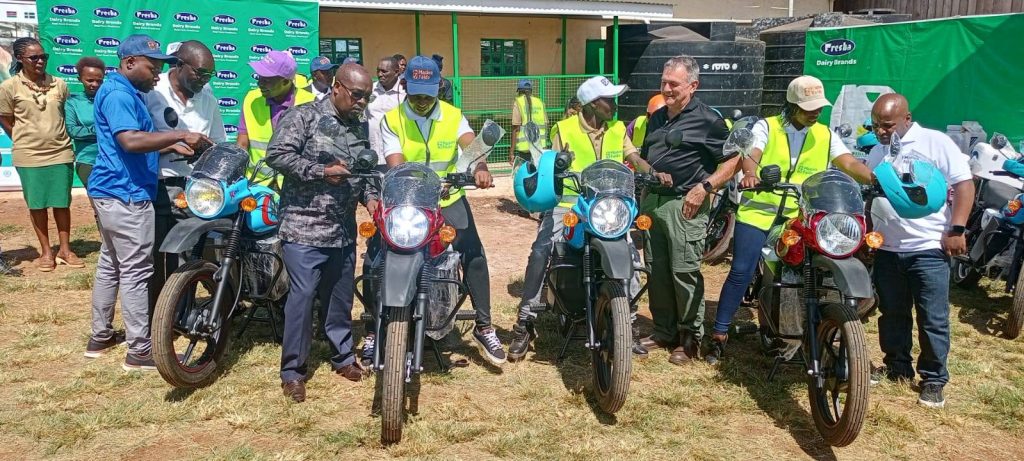

“There’s no fuel, just charging,” he said. “When you combine that with solar power, your operating expenses drop dramatically.”
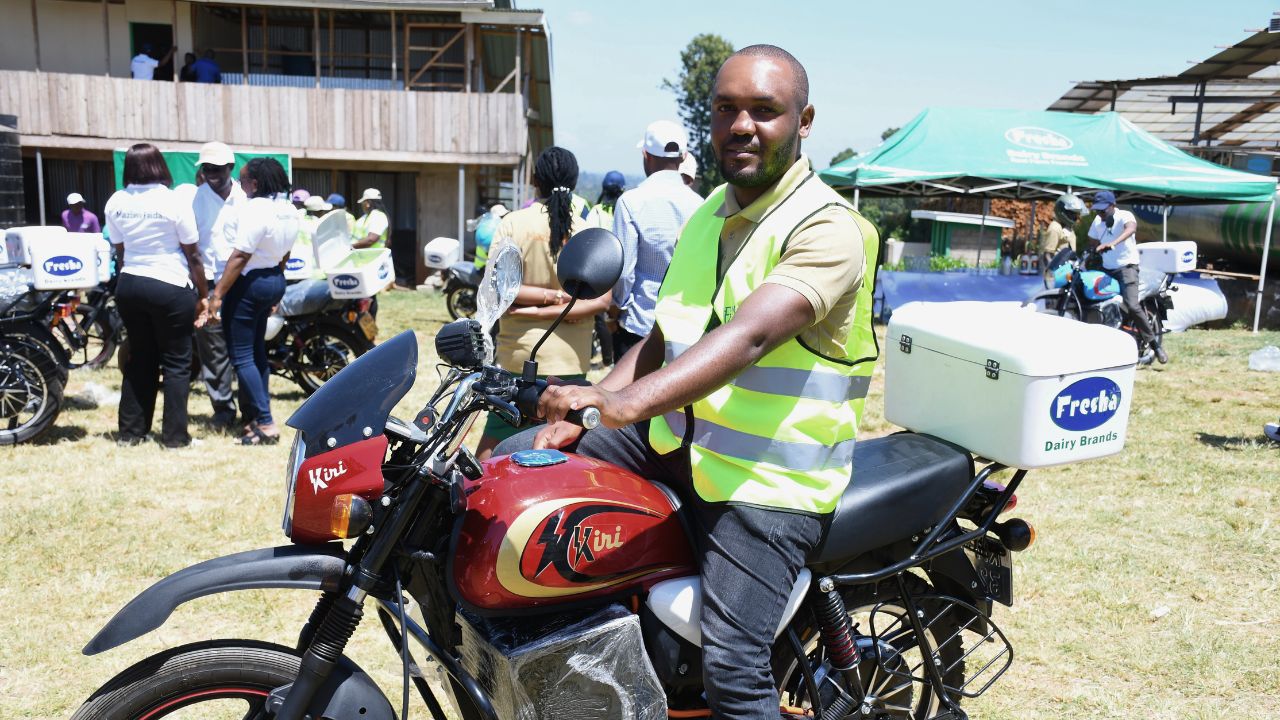
While the electric motorbikes are not used to transport milk cans themselves, cooperative officials insist their indirect impact on milk volumes is substantial. Faster and more frequent farm visits allow extension officers to address animal health issues, feeding practices, hygiene standards, and equipment maintenance before quality deteriorates.
To maximize the benefit of the new mobility, Githunguri Dairy has recruited 35 additional extension officers, reducing the farmer-to-officer ratio from about 700:1 to 350:1. Each farmer is now scheduled to receive at least three visits per year, a significant upgrade from the sporadic contact that was previously common.
The cooperative has also equipped its officers with laptops to digitize farm records, track milk yields, and provide more tailored advice. This marks a shift away from reactive troubleshooting toward a data-driven support model.
Michael Vandenberghe, project manager for Tetra Pak’s Dairy Development for Greater Middle Eastern Africa program, said that mobility is often the missing link in rural extension services.
“When officers can move faster and reach more farmers, they can improve feed rations, animal health, and hygiene practices,” Vandenberghe noted. “That translates directly into higher milk volumes and better incomes for farmers.”
Beyond transport and advisory services, the Maziwa Faida initiative also includes the establishment of a dairy academy at Githunguri. The planned training center will focus on modern livestock husbandry, recordkeeping, farm business management, and climate-smart dairy practices, preparing farmers for a more volatile operating environment.
Project partners emphasize that sustainability is a core pillar of the program. By lowering transport costs, improving productivity, and promoting efficient resource use, the cooperative aims to help farmers cope with rising feed prices and increasingly erratic weather patterns.
Githunguri Dairy currently processes about 250,000 liters of milk per day, making it one of the largest cooperatives in the country. It projects daily intake to rise to 350,000 liters by 2027, driven largely by better farm-level performance rather than simply recruiting new members. Last year, farmers delivered more than 92 million liters of milk to the cooperative.
For many producers, delayed technical support has long been a hidden drain on earnings. Mastitis outbreaks, feed imbalances, or poor hygiene can take weeks to detect when officers are stretched thin and travel costs are high. By cutting response times, the cooperative believes the electric motorbikes will help prevent these losses before they show up at the collection center.
As one extension officer put it informally, the bikes have turned what used to be an all-day trip into a routine morning round.
As the battery-powered vehicles weave through villages and small farms, they represent more than just a new way to get around. For Githunguri Dairy, they signal a shift toward cleaner energy, lower costs, and a more resilient rural economy — showing how a modest investment in mobility can ripple across the entire dairy value chain.
Written for eDairyNews, with information from: Kenya News Agency – KNA (Facebook)