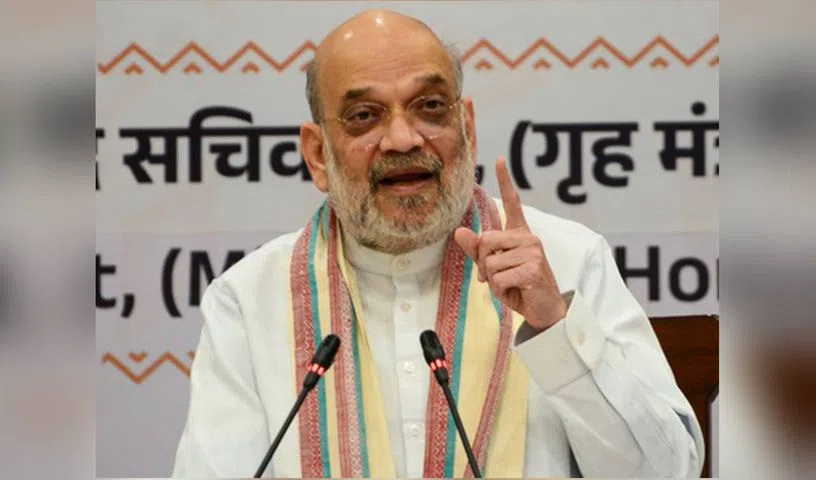




Amit Shah lays foundation for ₹200 crore Saras dairy plant in Alwar as part of a nationwide strategy to establish village-level dairy cooperatives.
Union Home and Cooperation Minister Amit Shah has outlined a strategic roadmap positioning the dairy and cooperative sectors as central growth engines to transform the rural economy and advance India’s goal of becoming a fully developed nation by 2047 (Viksit Bharat). Speaking at a regional development summit in Alwar, Rajasthan, alongside Chief Minister Bhajanlal Sharma and Union Minister Bhupender Yadav, Shah emphasized that sustainable economic empowerment must directly uplift smallholder livestock owners, marginal farmers, youth, and women across agrarian corridors.
A major milestone of the event was the foundation stone laying for a new modern processing facility at the Saras Dairy Complex in Alwar, representing an initial capital investment of ₹200 crore. The plant will begin operations with a baseline liquid milk handling and processing throughput of 3 lakh (300,000) litres per day, with planned engineering capacity designed to scale to 5 lakh (500,000) litres per day. The facility will expand regional value-added manufacturing, modernize cold-chain logistics, and secure consistent daily procurement for thousands of milk producers affiliated with the Rajasthan Cooperative Dairy Federation (RCDF).
The Alwar plant expansion is part of an overarching policy mandate to ensure complete geographical coverage for primary cooperative societies. Shah highlighted that Rajasthan currently operates approximately 44,000 active cooperative societies, reaffirming the central government’s objective to eliminate institutional coverage gaps so that every single village across the state and the wider nation possesses an active, functioning Primary Agricultural Credit Society (PACS) or dedicated village-level dairy cooperative.
Integrating smallholder producers into formal cooperative networks addresses critical structural vulnerabilities in the unorganized dairy sector, such as arbitrary middleman pricing, seasonal flush price discounting, and limited access to institutional credit. By pairing automated milk collection centers with state-backed cooperative processing plants, regional milk unions can guarantee transparent fat-and-SNF pricing, provide subsidized veterinary care and balanced cattle feed, and return manufacturing margins directly to livestock keepers.
The policy push in Rajasthan underscores how public capital expenditure in cooperative dairy infrastructure is being deployed to drive agrarian income security and formalize rural value chains. Modernizing processing capacity through automated cooperative facilities like the Saras Alwar plant strengthens supply resilience to meet rising urban dairy demand while safeguarding producer payouts against inflation. As India targets long-term economic development milestones, expanding localized cooperative networks will remain vital to stabilizing farmgate economics across the subcontinent.
Source: Telangana Today / PTI
You can now read the most important #news on #eDairyNews #Whatsapp channels!!!
eDairy News ÍNDIA: https://whatsapp.com/channel/0029VaPidCcGpLHImBQk6x1F