

Historic pact reshapes global commerce, with tariffs slashed on most goods while sensitive sectors remain shielded.
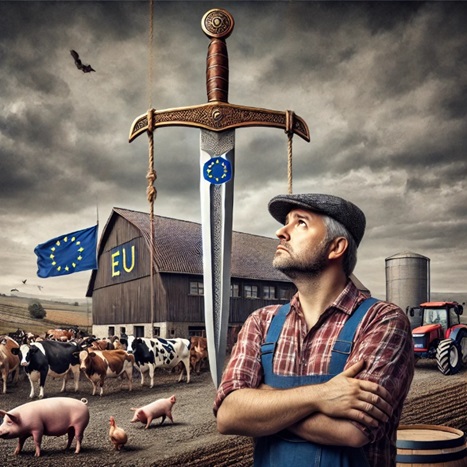
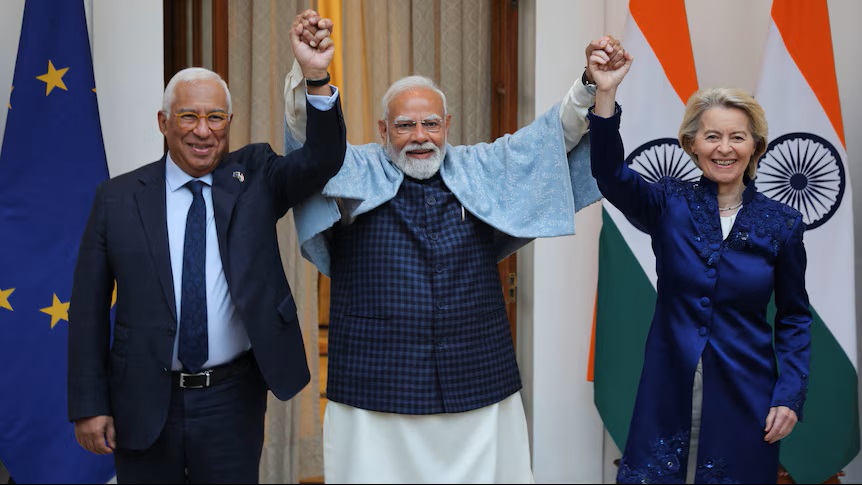
After nearly two decades of negotiations, India and the European Union have concluded a landmark Free Trade Agreement (FTA) that aims to liberalise trade across a massive economic bloc representing roughly 2 billion people and about a third of global trade. Leaders from both sides have labelled it the “mother of all deals,” reflecting its scope, scale and geopolitical importance amid shifting global trade dynamics.
Under the pact, tariff barriers will be dramatically reduced or eliminated on the vast majority of traded goods. The EU plans to drop tariffs on more than 96 % of goods by value imported into India, saving European exporters an estimated €4 billion annually. For import duties on specific items like European cars, India will slash duties from around 110 % to 10 % over five years under a 250,000-vehicle quota, opening its large automotive market to major European manufacturers.
On the Indian side, EU member states have committed to cutting or removing tariffs on nearly all Indian exports entering their markets. Tariffs on textiles, leather, chemicals, marine products, gems and jewellery — key export categories — are set to be phased out, with many becoming tariff-free over time. This opening is expected to enhance competitiveness for labour-intensive and value-added export sectors in India.
Notably, sensitive sectors such as dairy and cereals have been excluded from tariff liberalisation to protect domestic producers in both regions. India will maintain tariffs on core agricultural products like milk and cheese, while the EU similarly safeguards certain agricultural imports. This calibrated approach attempts to balance liberalisation with protection for vulnerable producers and food systems.
Beyond goods, the FTA extends into services, investment and mobility frameworks, with potential provisions to ease movement for skilled workers, students and professionals. Leaders from both parties framed the agreement as a response to global economic challenges, including high tariffs imposed by other trading partners, signalling a broader shift toward diversified, rules-based cooperation in international trade.
Source: ABC News – What is in the EU-India free trade deal and what does it mean for global trade?
https://www.abc.net.au/news/2026-01-28/what-is-in-the-eu-india-free-trade-deal/106276554
You can now read the most important #news on #eDairyNews #Whatsapp channels!!!
🇮🇳 eDairy News ÍNDIA: https://whatsapp.com/channel/0029VaPidCcGpLHImBQk6x1F