



New research shows diverse motivations — manure, draught power, nutrition — shaping India’s cattle economy beyond milk markets.
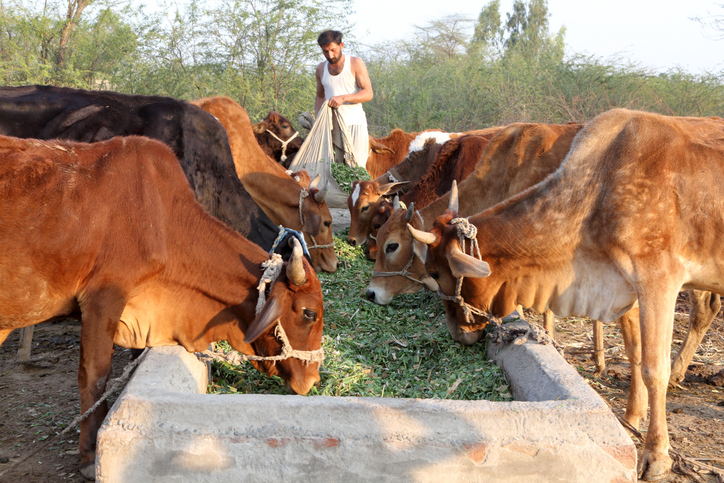
A new CEEW study surveying more than 7,300 cattle-rearing households across 15 states reveals that about 38 % of India’s cattle rearers do not sell milk, challenging the assumption that dairy income is the primary motivation in rural livestock systems. Instead, many rural families value cattle for household nutrition, draught power and non-market benefits, highlighting the multifaceted role of bovines in agrarian livelihoods rather than a pure focus on market sales.
The research shows significant regional variation: in states like Jharkhand, West Bengal and Himachal Pradesh, the share of rearers who don’t sell milk exceeds 50 %–70 %, while even in more formalised dairy states such as Maharashtra and Karnataka, more than 30 % of cattle owners prioritise non-milk uses like dung and farm support products. These patterns are especially linked to households owning 1–2 indigenous animals integrated into mixed farming systems.
Across India, about 74 % of rearers value dung for manure, fuel or sale, and some 7 % keep cattle exclusively for non-milk purposes such as draught power or income from selling animals. This suggests that integrated cattle roles underpining ecological and household needs — beyond milk production — are a practical cornerstone of rural economies, particularly where feed and fodder shortages are pervasive and dairy markets are less accessible.
The study also highlights major constraints facing rearers, with three in four reporting feed and fodder shortages and limited adoption of government feeding interventions, which remain low despite high awareness gaps. Climate change impacts — including heat stress, disease and mortality — are reported by large shares of buffalo, crossbred and indigenous rearers, pointing to growing risks that interact with motivations for cattle retention and breed choices.
CEEW recommends policy realignment that recognises the diversity of cattle-rearing motivations — from dung-based value chains and draught support to climate resilience — and that extends beyond traditional milk-centric strategies. Tailored interventions in fodder security, localised extension services, and support for non-milk value streams could help make India’s dairy and cattle sector more inclusive and responsive to ground realities.
Source: DDNews via CEEW press release — https://ddnews.gov.in/en/ceew-study-reveals-large-share-of-cattle-rearers-prioritise-manure-and-draught-power-over-milk-sales/
You can now read the most important #news on #eDairyNews #Whatsapp channels!!!
🇮🇳 eDairy News ÍNDIA: https://whatsapp.com/channel/0029VaPidCcGpLHImBQk6x1F