

The ICAR–NDDB MoU signed in January 2026 marks a significant step toward strengthening India’s dairy research ecosystem by formally linking laboratory science with real-world farm practices across the country.
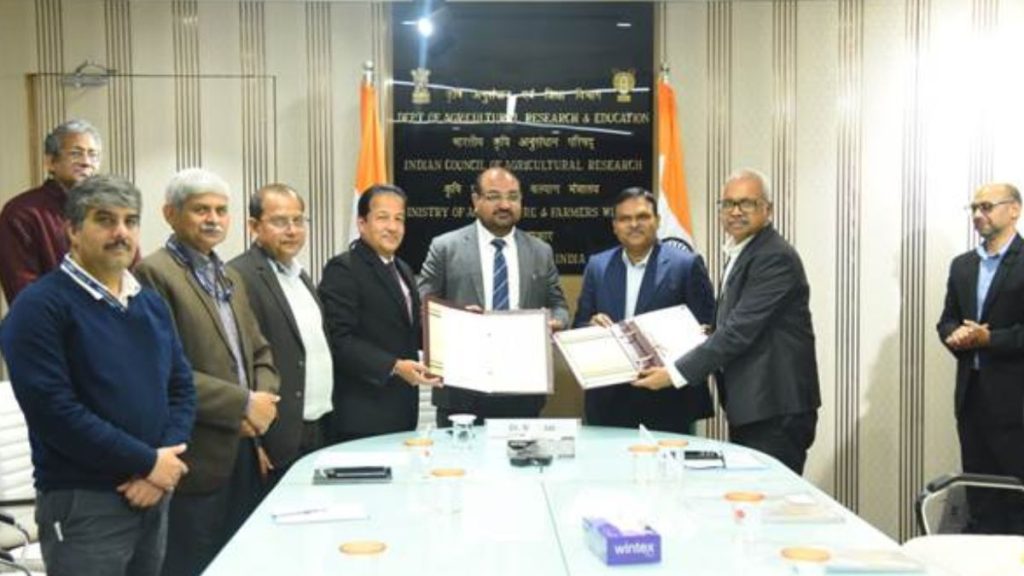
On January 12, the Indian Council of Agricultural Research and the National Dairy Development Board entered into a strategic Memorandum of Understanding designed to deepen cooperation in research, innovation, and extension. Officials from both institutions said the partnership is aimed squarely at improving productivity, resilience, and value addition in India’s vast dairy sector, which supports millions of smallholder farmers.
The agreement brings together two complementary strengths. ICAR contributes its nationwide network of research institutes and scientific expertise, while NDDB provides decades of on-ground experience in dairy development and cooperative building. Together, they plan to cover the full dairy value chain, from breeding and fodder systems to milk processing and market-oriented value addition.
According to people familiar with the discussions, a core objective of the ICAR–NDDB MoU is to ensure that innovations do not remain confined to laboratories. Instead, new technologies will be validated in real farm conditions before being rolled out at scale. This approach is expected to shorten the time between research breakthroughs and their adoption by farmers.
Senior officials said the partnership also seeks to address emerging challenges facing the livestock sector, including stagnant productivity in certain regions, rising feed costs, and the growing impact of climate variability. By pursuing multidisciplinary research and coordinated extension strategies, both institutions hope to deliver practical, demand-driven solutions.
Empowering farmers lies at the heart of the collaboration. Under the MoU, joint training programs will be organized for dairy farmers, researchers, and field professionals to improve technical skills and awareness. These programs will focus on translating research outputs into field-level practices that directly improve milk yields, animal health, and farm profitability.
The agreement places strong emphasis on strengthening extension services and knowledge-sharing platforms so that scientific progress can be felt at the grassroots. Officials involved in the drafting process noted that India’s diverse agro-climatic conditions require flexible, locally adapted solutions rather than one-size-fits-all technologies.
In the area of research and innovation, the partnership aims to break down institutional silos. Focus areas include climate-resilient livestock systems, fodder development, addressing low productivity pockets, and strengthening dairy value chains. ICAR’s institutes are expected to provide advanced tools and scientific inputs, while NDDB will facilitate large-scale field testing and farmer adoption.
Innovation-driven solutions such as improved feeding strategies, manure management, biogas utilization, and integrated farming systems are among the priorities identified under the ICAR–NDDB MoU. Officials said this ensures that research agendas remain grounded in the day-to-day challenges farmers face.
Leadership from both sides framed the agreement as a long-term investment in India’s rural economy. ICAR Director General Mangi Lal Jat stressed the importance of integrated farming systems, fodder security, and sustainable approaches such as gaushala-based manure management. NDDB Chairman Meenesh Shah described the MoU as a potential foundation for one of the world’s largest integrated dairy research platforms.
Both leaders emphasized that the collaboration aligns with the national vision of Viksit Bharat, under which scalable and replicable development models are being promoted to raise rural incomes and strengthen food systems.
Capacity building is another pillar of the agreement. The MoU promotes joint workshops, skill development programs, and specialized training for scientists, extension officers, and farmers. Areas such as ration balancing, mineral mapping, ethno-veterinary medicine, and total mixed ration practices will receive renewed focus.
Knowledge sharing between ICAR’s research infrastructure and NDDB’s field network is expected to standardize best practices and improve efficiency across the dairy sector. Officials said this continuous learning ecosystem could help India maintain its position as one of the world’s leading milk producers while improving sustainability metrics.
The partnership builds on a long history of cooperation between the two institutions. ICAR serves as the country’s apex body for agricultural research and education, while NDDB has played a central role in India’s dairy development, including the White Revolution. Previous collaborations on nutrition, productivity, and dairy missions laid the groundwork for the new MoU, which officials describe as a natural extension of a shared legacy.
As the ICAR–NDDB MoU moves into the implementation phase, stakeholders across the dairy industry will be watching closely to see how effectively science and field practice can be integrated. For millions of farmers, the success of this alliance could translate into better technologies, stronger support systems, and more resilient livelihoods.
Written for eDairyNews, with information from: Adda247