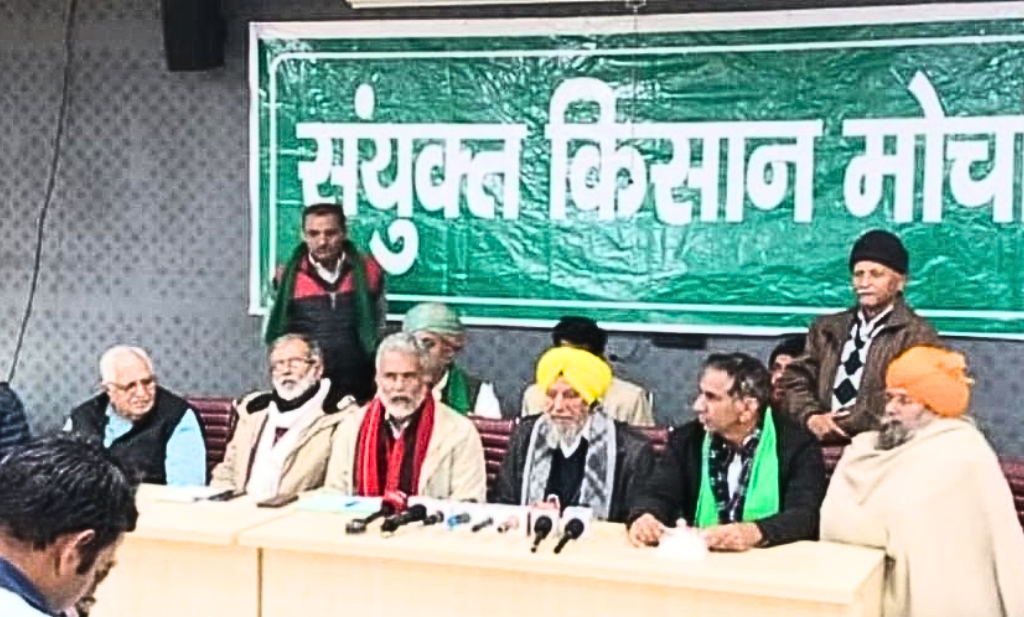



Krishna Prasad, finance secretary of the All India Kisan Sabha (AIKS), framed the protests within a broader political and geopolitical context. He said farmers were being forced back onto the streets by what he described as an increasingly hostile policy environment created by the central government.
According to Prasad, the passage of the rural employment guarantee overhaul without adequate parliamentary debate marked a turning point. He added that external pressure has now entered the equation, raising alarms within the farm movement.
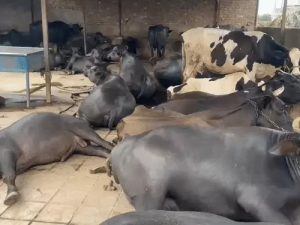
He pointed to what SKM leaders described as growing intervention by the United States in India’s agricultural trade policy. The unions allege that Washington is pushing New Delhi to open sensitive sectors—including dairy, maize, soybean, and other farm commodities—to low- or zero-duty imports.
Drawing comparisons with cotton liberalization, Prasad noted that import duties on cotton were removed despite domestic concerns. He warned that similar concessions in dairy and feed crops could expose Indian farmers to dumped surplus products from abroad, particularly those redirected from other global markets.
SKM leaders said any move toward a bilateral free trade agreement with the United States, if it compromises domestic agriculture, would represent a betrayal of farmers and workers in favor of multinational corporations.
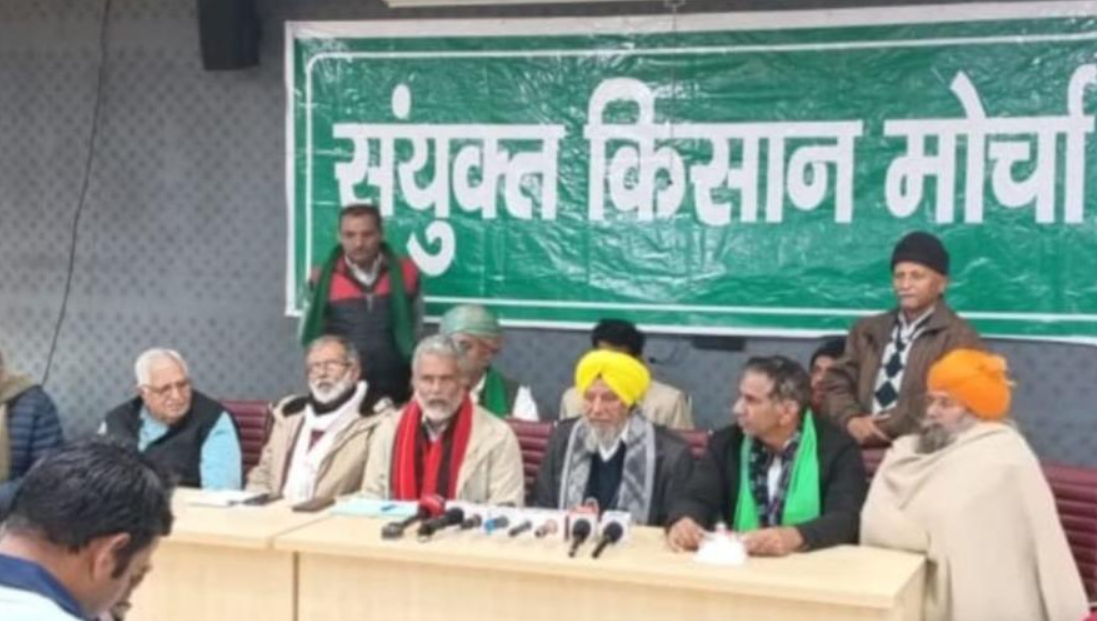
Under its action plan, the SKM has called for January 16 to be observed as Resistance Day across the country, with support from central trade union platforms. This will be followed by tractor and motorcycle rallies on January 26, symbolically marking Republic Day as a moment of “democratic assertion.”
On February 12, farmers will join an all-India general strike called by trade unions, aiming to demonstrate what organizers described as unprecedented unity between workers and peasants through mass protests in every state.
The Morcha also issued a warning on electricity reforms, stating that any attempt to pass the Electricity Amendment Bill without prior consultation—despite assurances given in 2021—would trigger immediate nationwide resistance.
Criticism was also extended to recent trade agreements with countries such as New Zealand and the United Kingdom. According to the SKM, these deals risk flooding Indian markets with imported agricultural products, including milk and dairy items, at reduced tariffs, placing domestic producers at a disadvantage.
The unions cited the experience of cotton farmers as a cautionary example. They pointed out that current market prices remain far below the minimum support price promised under the Swaminathan Commission’s C2+50 percent formula, a commitment that, they argue, remains unfulfilled.
Reflecting on the 2020–21 farmers’ movement, Prasad emphasized that its strength came from grassroots mobilization rather than organizational leadership. He linked that movement to recent political outcomes, arguing that rural discontent had already reshaped electoral results.
Ashish Mittal, general secretary of the All India Kisan Mazdoor Sabha, focused on employment and energy issues, accusing the government of hollowing out MGNREGA while shifting financial burdens onto states. He also criticized electricity privatization plans, including smart meters and peak-hour pricing, which he said threaten affordable access to a basic public service built on land acquired from farmers.
With multiple policy fronts converging, SKM leaders said the coming weeks would test the government’s willingness to engage with rural India. For farmers’ unions, the message remains clear: agriculture, dairy, and livelihoods will not be negotiated away under external pressure.
Written for eDairyNews, with information from News Click.